
Visualising the impact of aid cuts on health systems in fragile and conflict-affected settings
During 2026, a group of health systems researchers have worked as a collective to craft collage art on the effects of aid cuts. This is part of a larger process facilitated by the Thematic Working Group on Fragile and Conflict-Affected Settings within Health Systems Global. They were guided by results raised in a simultaneous process of policy brief development. But they also drew on their own experiences and how the consequences of changes in geopolitical priorities affected their own work and the communities they are closest to.
The Collage Collective is made up of researchers from a range of positions and backgrounds based in Myanmar, the UK, Sierra Leone, India, Lebanon and Thailand. Pamoja Communications is responsible for facilitating the process of learning about the method and art of collage and for convening the group. But decisions on the content of group sessions, the focus of the art and the communication of the work are collective.
Continue scrolling to see some of their work in progress.
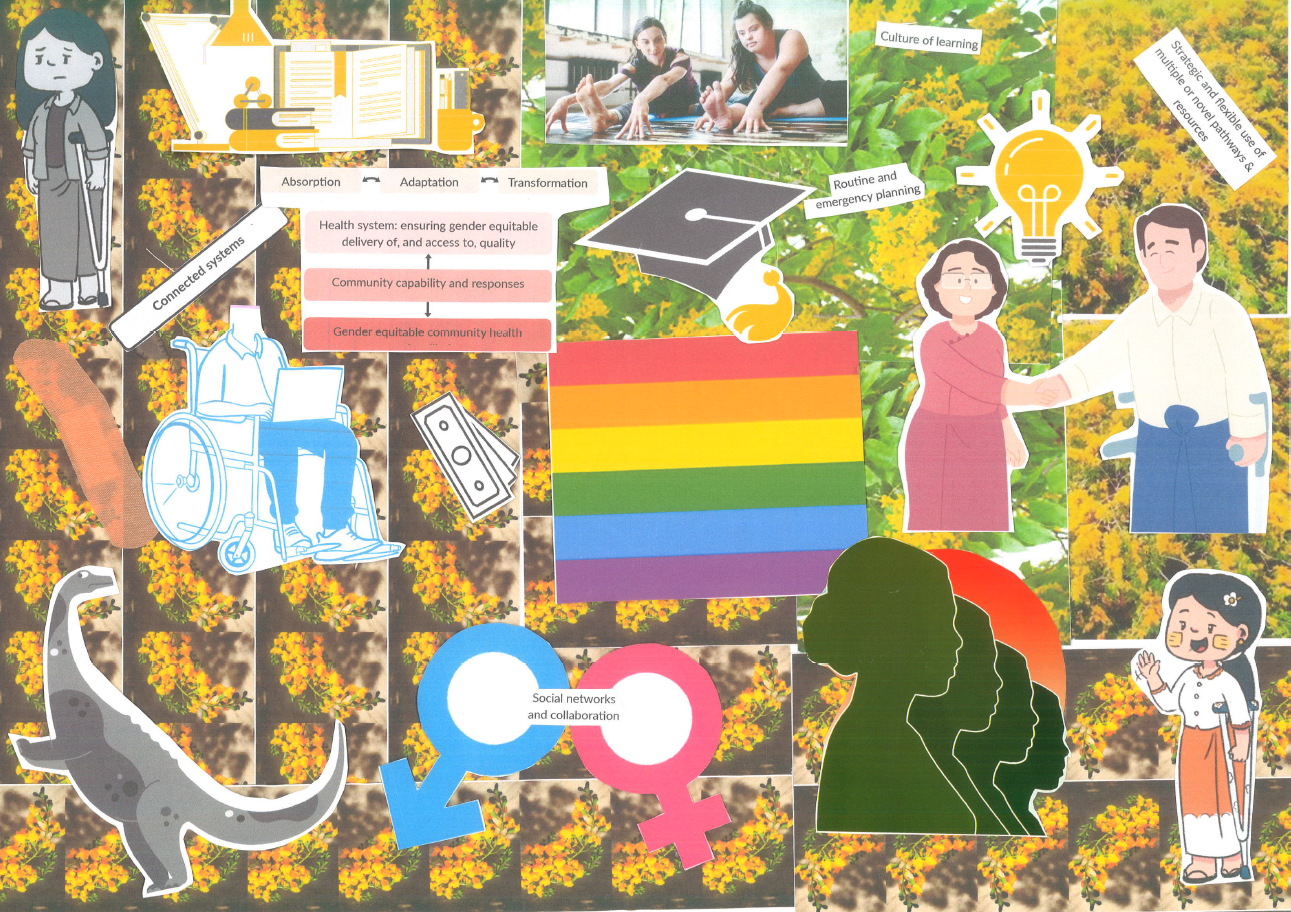
Together, if not now, when?
By Thazin La, Myanmar
This collage reflects on gender and intersectionality in aid cuts from the perspective of disability inclusion. The information presented in this collage is drawn from the findings of the Disability Inclusion at the Community Health System Project. Gender and disability inclusion are deeply interconnected with each other and with other social determinants. They coexist and should be addressed simultaneously, rather than one after another. Although the voices advocating for these issues are louder than before, many responses still focus on short-term or symptomatic solutions rather than long-term, sustainable change. These issues are not adequately considered in conversations about reductions in spending for health systems research. True inclusion requires deeper reflection, systemic action, and long-term commitment to addressing barriers and inequalities.
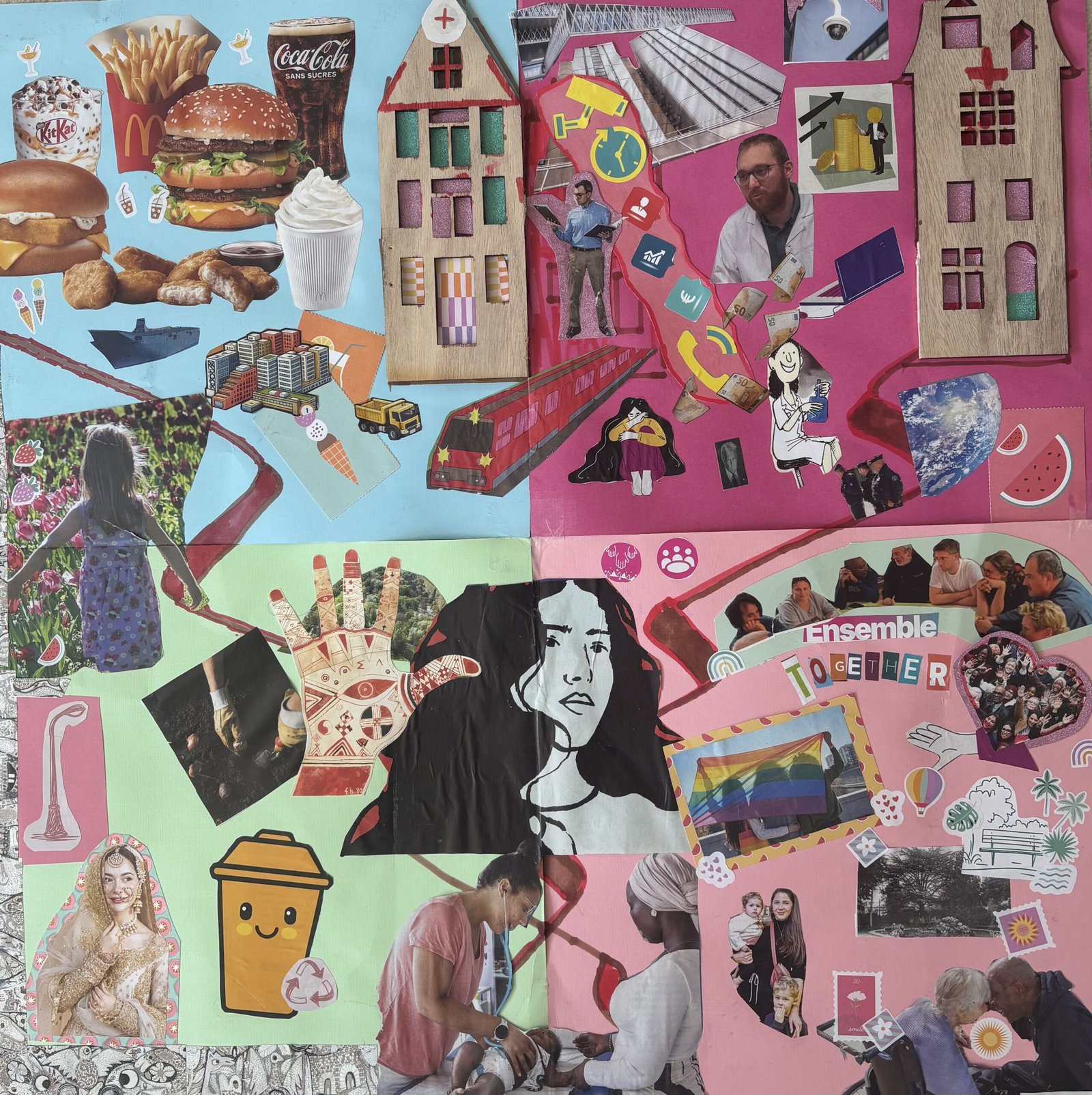
Health: Business or right?
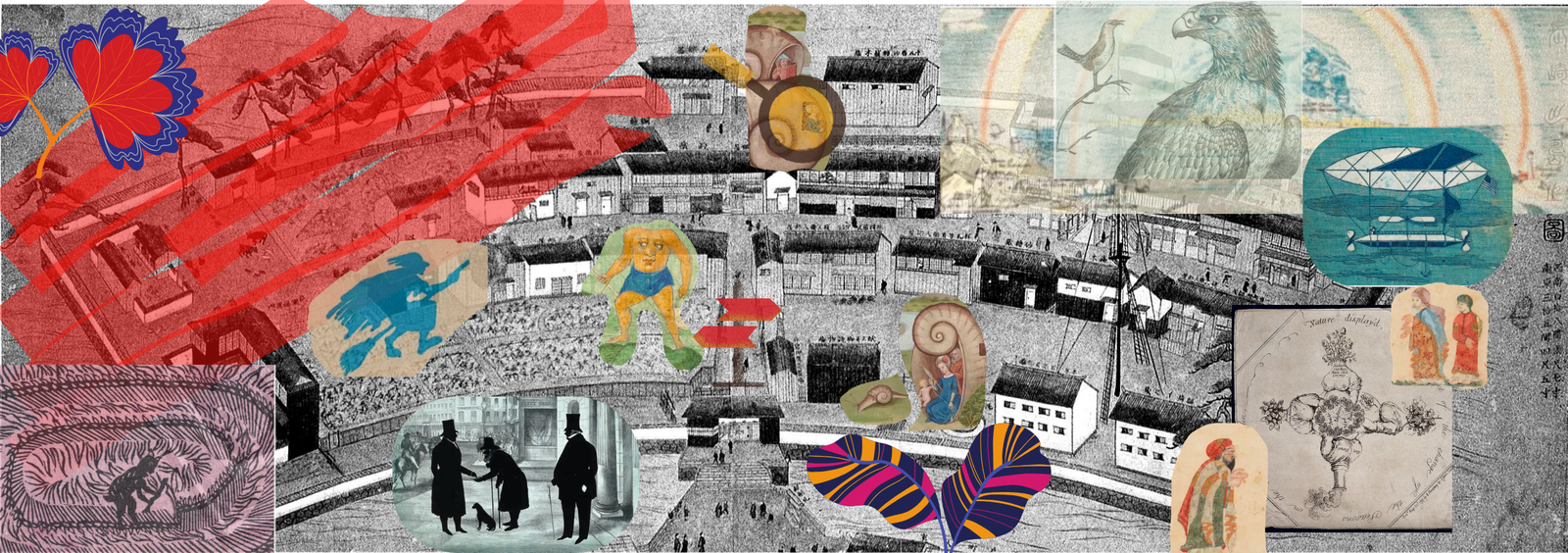
I am currently displaced from my home, for the 7th time since 1980 when I first moved to South Lebanon. This displacement is particularly long and holds tough conditions. As an older person, I have lost the capacity to adapt that I once had. It has already been three months, and I do not know where I will be sleeping next week. I am now living with my adult son in Saint-Denis, near Paris, France, a leftist municipality populated mainly by a disfavored population, most of them, like us, originating from the Global South.
This collage was made from commercial flyers I found in my mailbox. I had in mind a different idea: a piece called “Dead Aid,” arguing for global social justice and against a concept of aid that reinforces certain privileged officers more than it reinforces communities. But junk mail in the leftist municipality of Saint-Denis doesn’t talk about financing, funding, contracts, agreements, or commercial projects. What it had plenty of was community life, largely promoted and distributed. So I changed the direction of my piece while making it.
What it became is a comparison of two versions of health. On the upper side of the collage: the corporate, industrial face of health. Uncontrolled fast food, hospitals and doctor-centered care, surveillance cameras, clocks, living in compounds, riding quick trains, depending on trucks, files, folders, reports, all of it ending with people left alone and crying. This is health turned into an industry, medicalized, standardized, and disconnected from the people it is supposed to serve.
On the other side: solidarity, the inclusion of youth, women, LGBT people, older people, and people of different generations and races together, a claim for the right to health, community involved in governance, building better health together. This is health rooted in community, in nature, in family, in prevention rather than treatment after the fact. It makes room for traditional and alternative medicine, and for cultural difference instead of erasing it. It is health as something people build and claim together, not something delivered to them.
The globe and the watermelon slice point outward, to Palestine and to climate change, sitting at the edge between the two versions of health. The corporate, industrial version fails social justice on the global scale, and the claim for the right to health includes the struggle for global causes like Palestine and global warming.
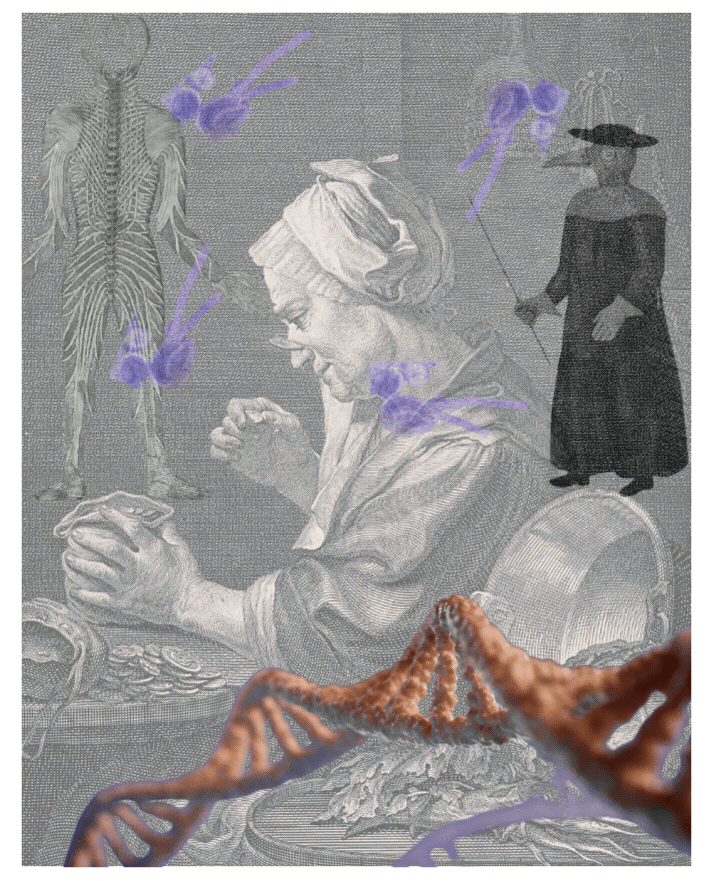
Aid cuts in an age of Ebola
By Kate Hawkins, UK
At the 2014 Global Symposium on Health Systems Research we were all rocked at the news of the Ebola outbreak in Sierra Leone. A breakout session was hastily arranged by the Thematic Working Group on Conflict-Affected and Fragile States and was packed with delegates keen to understand how they could lend their expertise and knowledge. I have a copy of the notes which I posted on a rather shaky WordPress blog which has unexpectedly survived to this day. Here we are, another outbreak, this time in Democratic Republic of Congo and during some of the worst cuts to global health financing we have seen. Yet the response is strangely muted. I wanted to reflect that and also the history of outbreaks and wealth hoarding that underpins this moment.
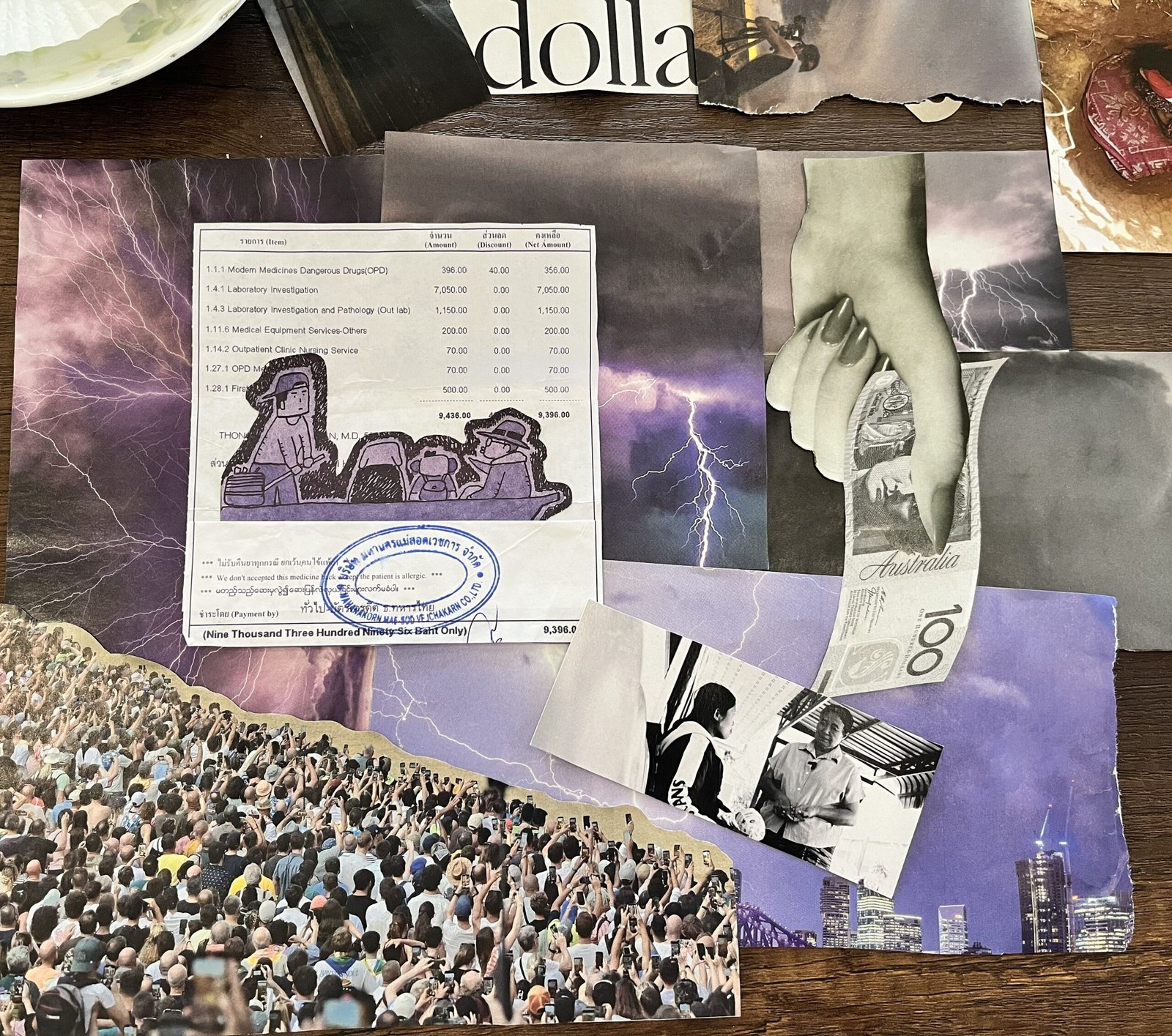
Weathering the storm
By Lydia DiStefano
Convergence
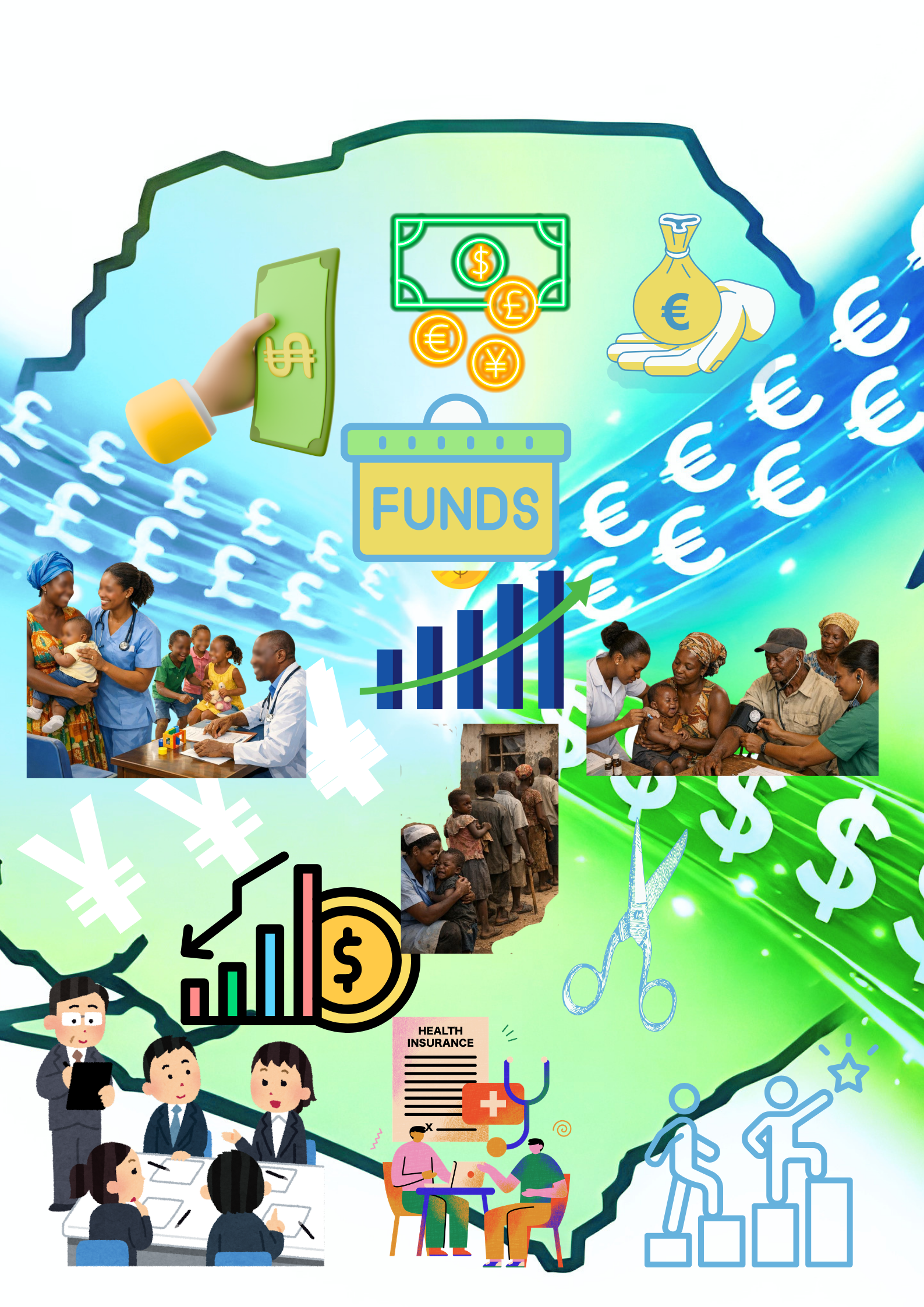
By Halimatu Kamara, Sierra Leone
Sierra Leone has historically relied on external aid to support essential health services, particularly in reproductive, maternal, newborn, and child health, equity-focused programming, and pharmaceutical supply chains. However, the current decline in external aid presents significant risks to service delivery, household financial protection, and overall health system performance. This collage provides insight into the current status of the health system and is informed by a ReBUILD for Resilience research project.
Crocodile tears for the refugees
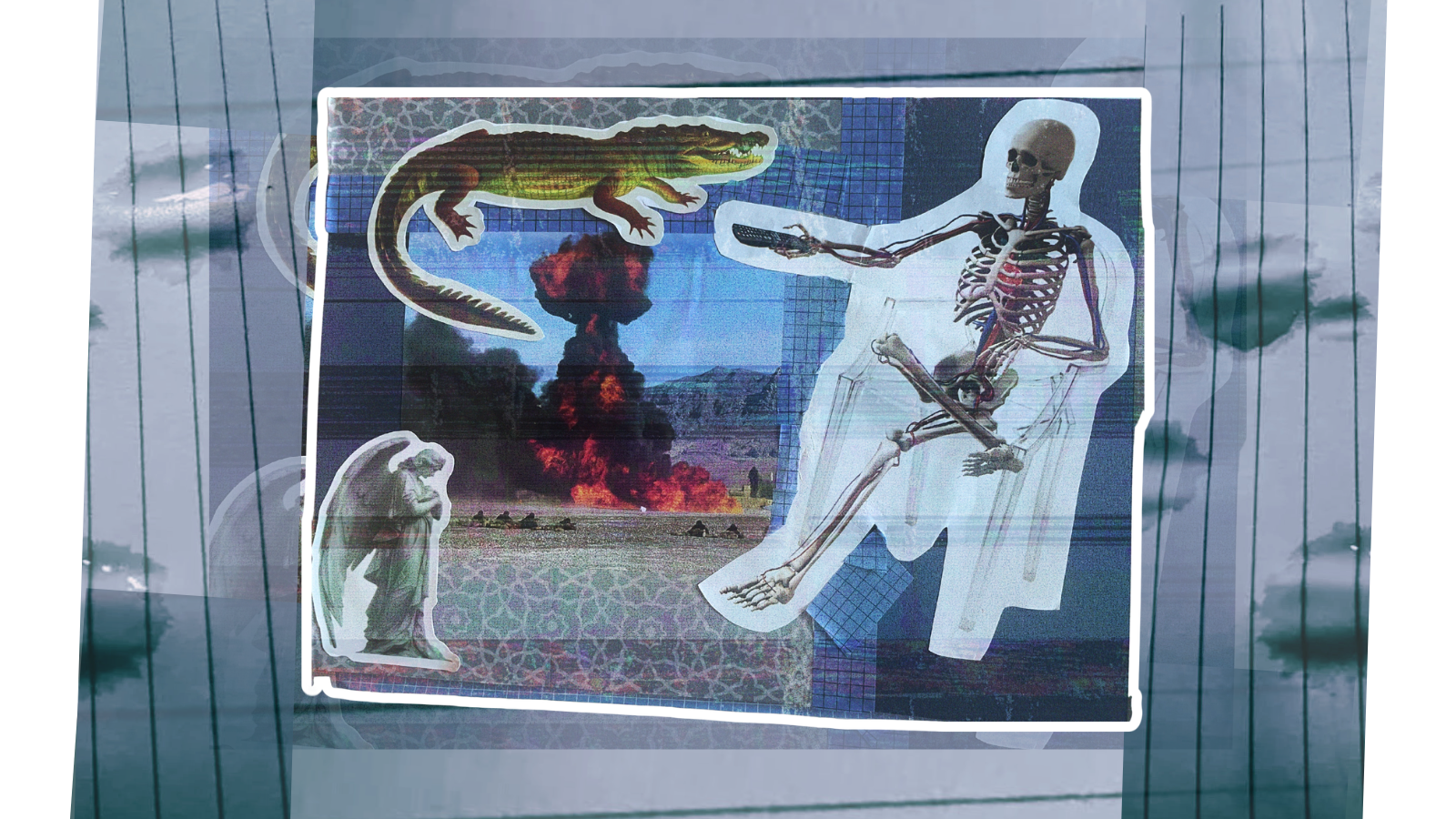
In making this collage, I was also influenced by Achille Mbebme’s theory of necropolitics. I wonder why there is so little contemplation of the politics of death in our work on health systems, and what is obscured as a result. This is particularly relevant to the recent cuts to development assistance and to health systems in conflict-affected settings. I am also aware that cuts in aid from my own country, the UK, are funding an increased war spend, something I find deeply disturbing, which is reflected in the collage.
This collage is also influenced by Martha Rosler and the series about America in Vietnam, Bringing the War Home.
Health is wealth
By Joanna Khalil, Lebanon
Blame
By Katy Davis, UK
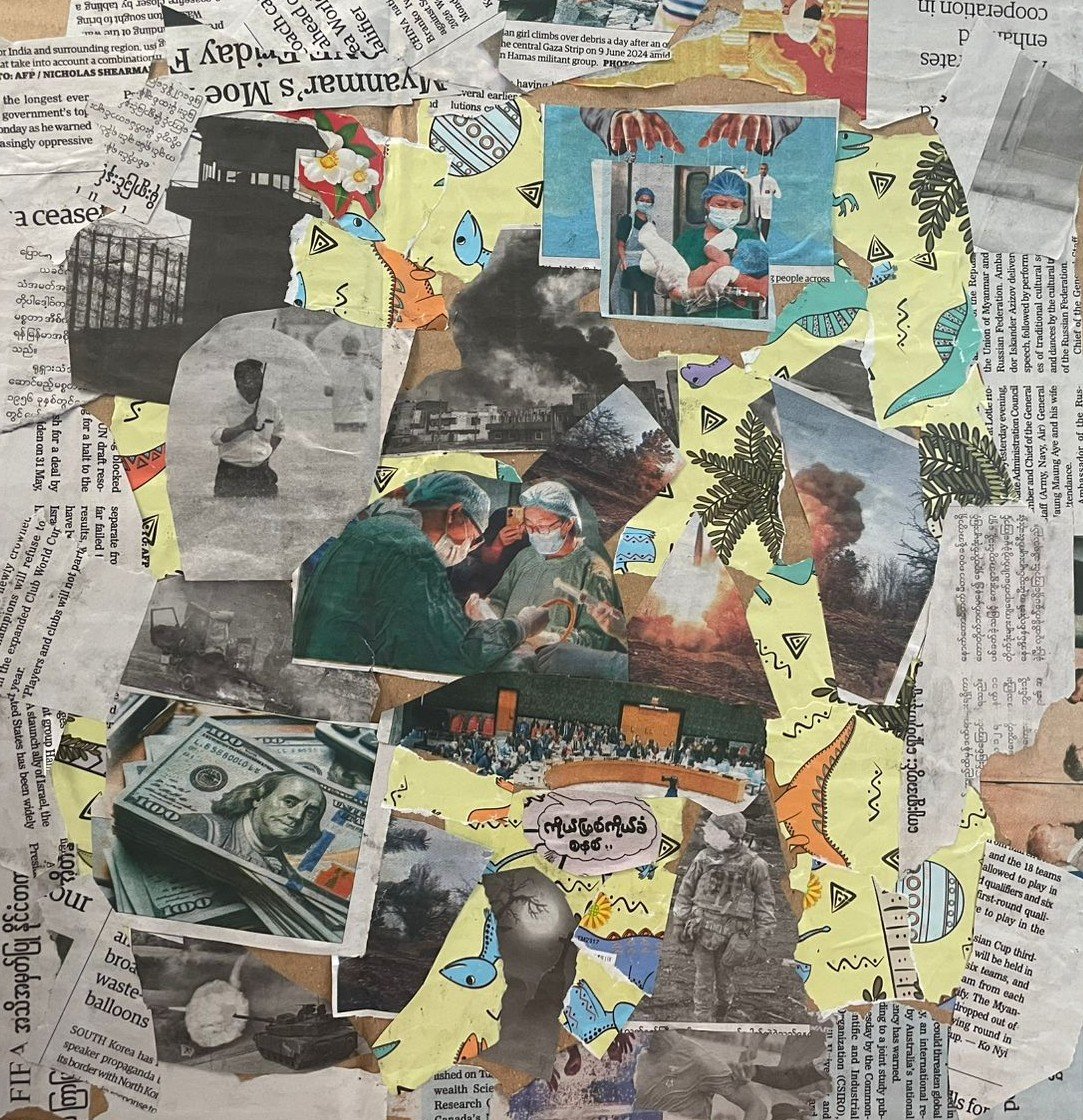
Crisis Within Crisis
By Aye Kyawt Paing, Myanmar
The ongoing instability and conflicts in Myanmar have led to population displacement towards highly endemic areas, contributing to the resurgence of communicable diseases. Myanmar’s health system is under immense strain due to the consequences of crises: escalating climate impacts, recurrent natural disasters, rising infectious diseases, on top of ongoing sociopolitical instability. Compounding these health challenges are diminishing foreign development assistance, primarily due to cuts in US aid and subsequent major global health disruptions. Additionally, the recent catastrophic earthquake measuring 7.7 in magnitude, which struck in March 2025, has severely damaged healthcare infrastructure and displaced communities. This has left many people vulnerable to disease outbreaks and lacking access to essential healthcare services. This instability have led to a fragile health system, threatening the health of people in Myanmar.
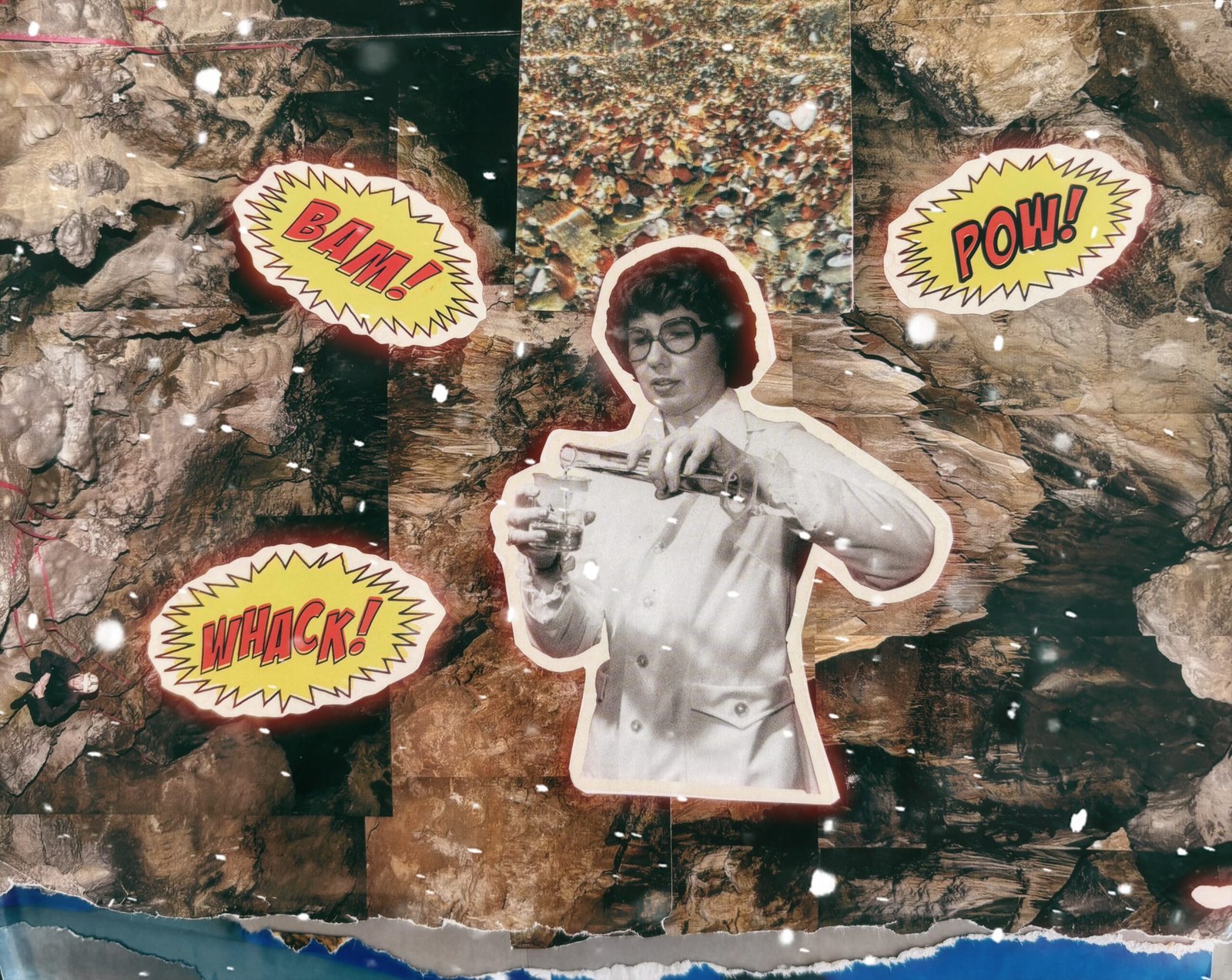
Caught between a rock and a hard place
By Kate Hawkins, UK
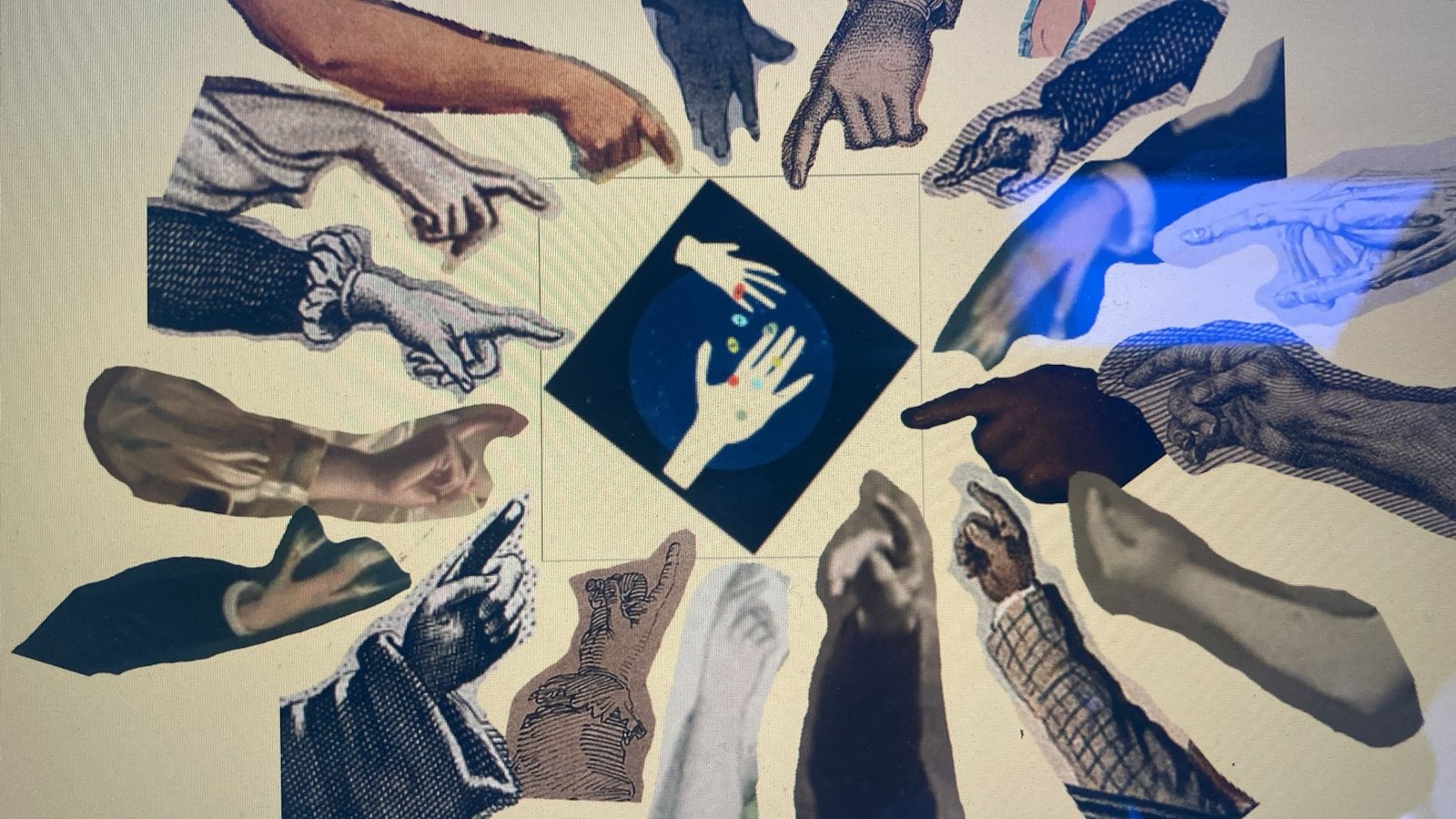
As aid cuts by the UK, US, Germany and others begin to bite, there has been an acknowledgement of the impact of slashed budgets on health systems research. Commentators point to the particular impact on scholars in low- and middle-income countries and those in fragile settings where research is already challenging. Less explored is the interaction between these cuts and the backlash against gender studies and diversity, equity and inclusion. These parallel pressures are shrinking the space for work on gender and equity within health systems and in our knowledge systems. They leave the scientists who focus on these issues caught between a rock and a hard place – continue your work and lose your job or renounce your interest in these topics to remain eligible for the funding that remains. Those researchers who are funded by the US are taking positions – such as the denial of the existence of trans people and the removal of power analysis from their methods and findings – that run counter to scientific norms and justice-oriented approaches.